目录
- Define Your Food Packaging Requirements
- Choose the Right Zipper Pouch Format
- Evaluate Materials and Barrier Performance
- Select the Zipper and Closure Features
- Determine the Correct Size and Capacity
- Plan for Filling and Heat Sealing
- Review Food-Contact Compliance and Safety
- Assess Printing and Package Design
- Test the Pouch Before Ordering at Scale
- Compare Suppliers and Total Packaging Cost
- Make a Confident Final Selection
The right zipper pouch protects food, supports efficient packing, and gives consumers convenient access to the product. This guide explains how to evaluate pouch materials, barrier properties, dimensions, closures, seals, equipment compatibility, food-contact requirements, and supplier capabilities before placing an order.
Define Your Food Packaging Requirements
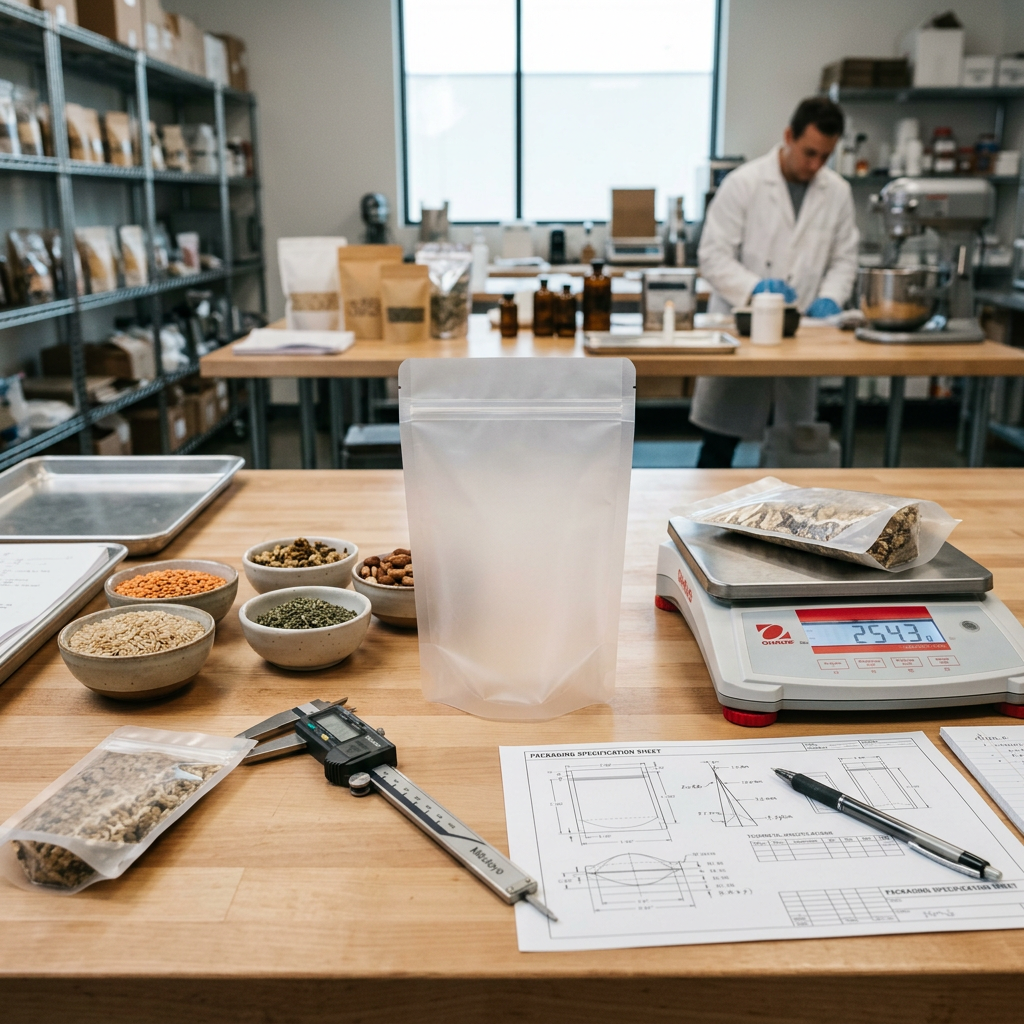
Choosing a zipper pouch starts with the food, not the package. Document the product’s physical characteristics, expected shelf life, distribution conditions, filling process, and consumer use before comparing materials or requesting prices.
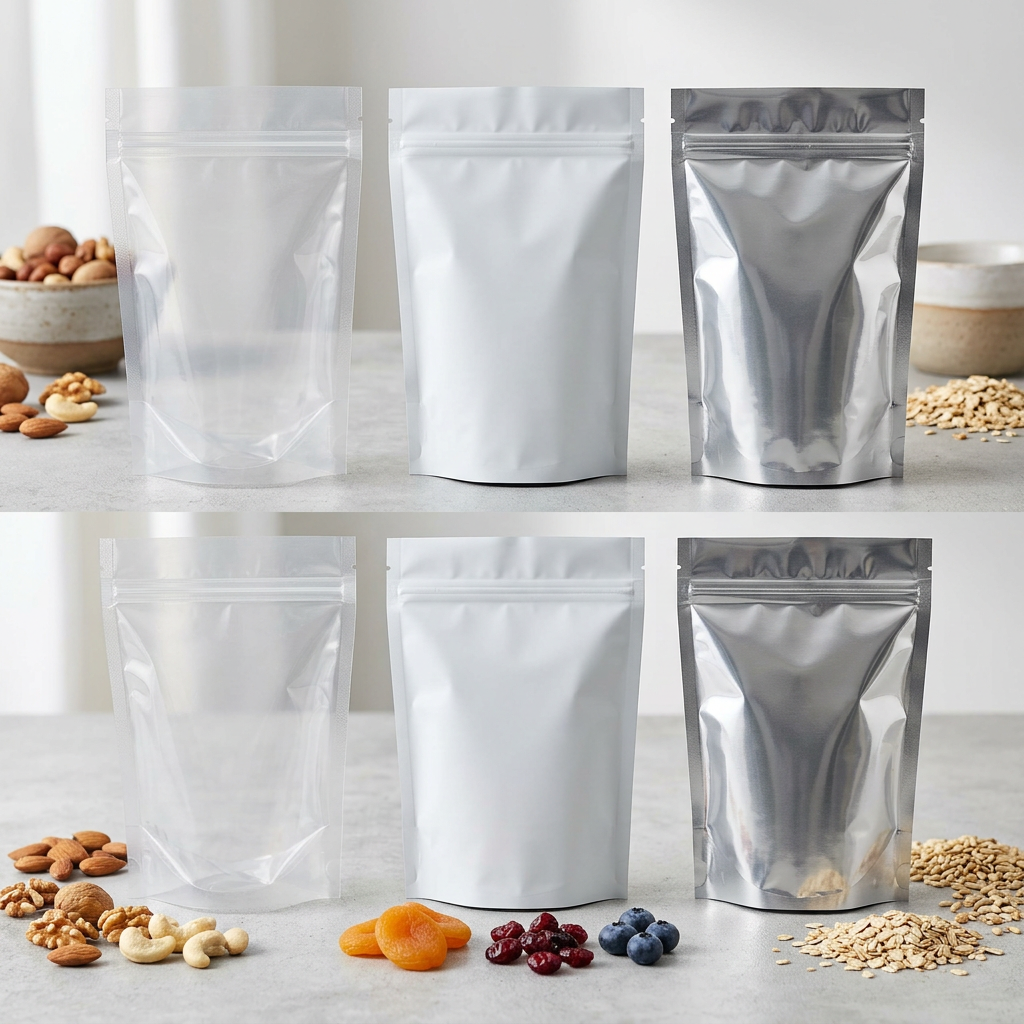
Consider whether the food is dry, oily, acidic, aromatic, powdered, frozen, or sensitive to oxygen, moisture, or light. Granola and dried fruit may need moisture control, while coffee, nuts, spices, and fatty snacks can require stronger protection against oxygen and aroma transfer. Powders introduce additional concerns because fine particles can collect in the zipper or heat-seal area.
Distribution also affects the specification. A pouch sold locally may face different handling conditions from one shipped through parcel networks or stored in hot, humid warehouses. Record the anticipated temperature range, shipping method, retail display format, and realistic time between packing and consumption.
Finally, define how customers will use the package. A large multi-serving product benefits more from reliable reclosure than a single-serving item. The pouch should be easy to open, stable during use, and appropriately sized so consumers can remove the food without spilling it. A written requirements brief keeps purchasing decisions focused on measurable needs instead of appearance alone.
Choose the Right Zipper Pouch Format
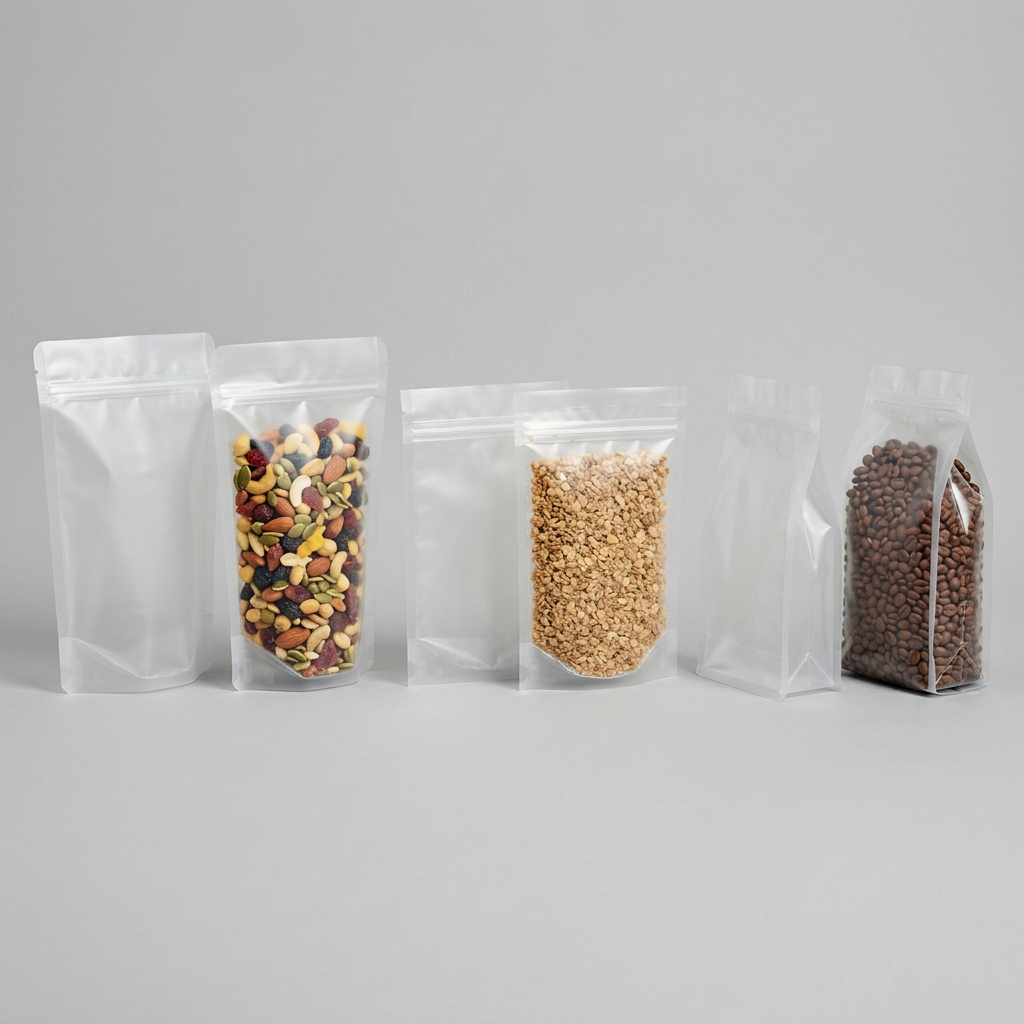
Zipper pouches are available in several constructions. The right format depends on shelf presentation, filling method, product weight, and how the package will be stored after opening.
A stand-up pouch uses a bottom gusset to create a broader base when filled. It can provide strong shelf presence and is commonly considered for snacks, dried foods, confectionery, pet treats, and other multi-serving products. Actual stability depends on the pouch dimensions, gusset design, material stiffness, fill weight, and product distribution.
A flat pouch has no bottom gusset and normally lies flat or hangs from a display feature. It can suit samples, lightweight foods, portion packs, and products packed in an outer carton. A side-gusseted format expands along the sides and may be useful for bulkier products, although zipper availability and equipment compatibility should be confirmed with the converter.
Stock pouches can be practical for trials, seasonal runs, or businesses that do not require custom printing. Custom pouches provide greater control over dimensions, structure, graphics, and features but may involve higher minimum quantities and longer lead times. Compare both options using the expected annual volume rather than evaluating unit price in isolation.
Evaluate Materials and Barrier Performance
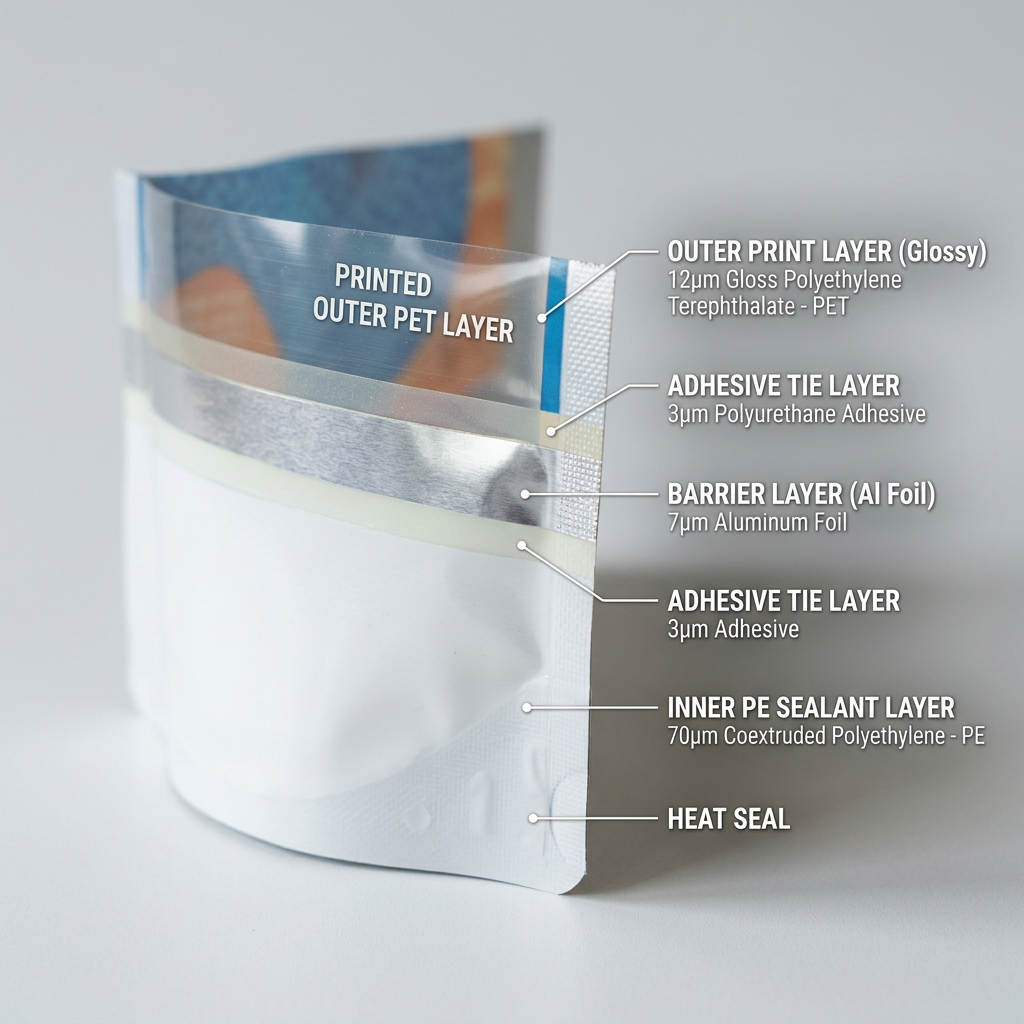
A food pouch is often made from multiple layers, with each layer serving a purpose. An outer layer may support printing, stiffness, and resistance to handling. A middle layer can contribute oxygen, moisture, light, or aroma protection. The inner sealant layer provides the food-contact surface and allows the pouch to be heat sealed.
Ask suppliers for the complete material structure rather than relying on broad descriptions such as “foil,” “plastic,” or “high barrier.” Packaging performance should be evaluated using relevant data, including oxygen transmission rate and water vapor transmission rate under stated test conditions. These values cannot be interpreted properly without the temperature, humidity, units, and test method.
Metalized films and aluminum foil may provide additional light and gas protection, but they differ in cost, appearance, flex-crack behavior, detectability, and recycling considerations. Clear structures allow product visibility, although a window may reduce overall barrier performance depending on its construction. Kraft-style appearances may be created with paper-containing laminates or printed films, so confirm the actual structure instead of judging by appearance.
More barrier is not automatically better. An excessive specification may add material, cost, and complexity without improving the product’s usable shelf life. Work with packaging and food-safety specialists to connect the required barrier level to the food’s deterioration mechanisms. Real-time shelf-life testing in the intended package remains important because transmission data alone cannot predict every product interaction.
Select the Zipper and Closure Features

The zipper provides consumer reclosure, but it should not be confused with the package’s initial tamper evidence or primary hermetic seal. Many preformed food pouches are filled through an open end and then heat sealed above or below the zipper, depending on the design. The consumer tears or cuts through the sealed area before accessing the closure.
Evaluate how easily the profiles align, how much force is needed to open and close them, and whether users can tell that the zipper is fully engaged. The best balance depends on the audience and package size. A closure that feels secure on a small sample may become awkward across a wide pouch.
Fine powders, crumbs, sugar, salt, and oily residues can interfere with zipper engagement. The filling process should minimize product contamination around both the closure and the final seal. If contamination is difficult to prevent, ask about closure designs and sealing systems suited to the application, then validate them with the actual food.
Optional features include tear notches, laser scoring, hang holes, rounded corners, handles, and degassing valves. Every feature should have a defined purpose. Tear aids must open consistently without weakening the package during distribution, and their position must preserve enough material for comfortable gripping. A valve may be relevant to products that release gas, but its suitability must be established for the specific product and process.
Determine the Correct Size and Capacity
Pouch capacity cannot be selected from net weight alone. Equal weights of coffee, granola, flour, and dried fruit occupy different volumes. Product shape, particle size, settling, trapped air, and the required headspace all affect the dimensions.
Request dimensional drawings that explain how width, height, bottom gusset, zipper position, and seal areas are measured. Usable space is smaller than the pouch’s outside dimensions because side seals, the zipper, the top seal, and curved corners occupy part of the package. For a stand-up pouch, the fill level can also influence whether the gusset opens fully and the package remains upright.
Run a volume and fill test with representative production material. Fill several candidate sizes using the intended process, settle the contents as they would be handled in production, and verify that the top seal area remains flat and clean. Check whether the consumer can reach the product comfortably as the package empties.
A pouch that is too small can be difficult to fill and seal. One that is unnecessarily large can look underfilled, consume more material, and increase shipping volume. The selected dimensions should accommodate normal product and process variation without creating excessive empty space.
Plan for Filling and Heat Sealing
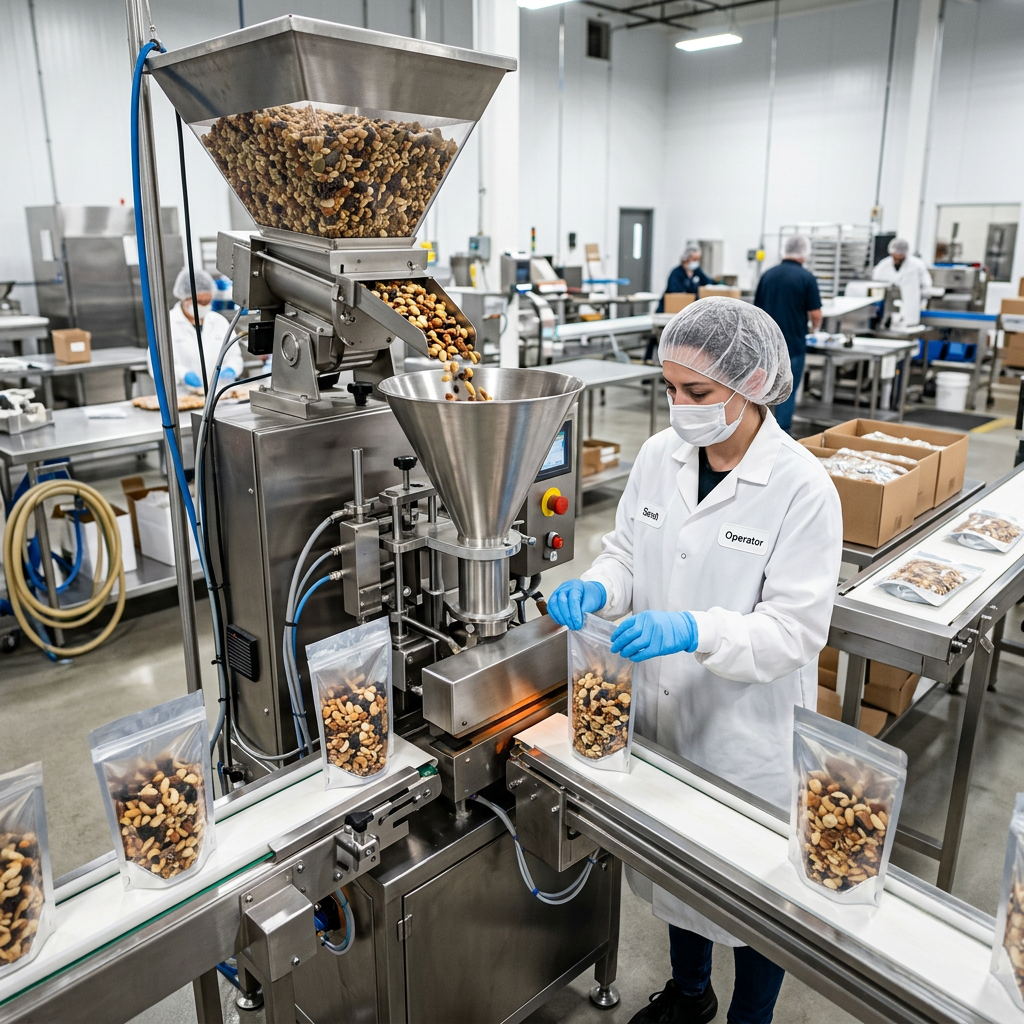
A suitable zipper pouch must run reliably on the intended packing line. Confirm whether filling will be manual, semi-automatic, or fully automatic. Equipment may impose limits on pouch width, height, thickness, opening style, zipper position, and the amount of clear material required for gripping or sealing.
Heat-seal performance depends on the sealant layer, jaw design, temperature, pressure, and dwell time. Line speed, pouch contamination, wrinkles, and equipment condition also affect results. Obtain the supplier’s starting recommendations, but establish and document a validated operating window on the actual equipment. A single temperature setting does not describe a complete sealing process.
The top seal should be continuous and free from folds, channels, food particles, and burned areas. Operators need enough headspace to keep the seal zone clean and place the package consistently. Powder control, product settling, bag opening, static, and air removal may need attention during line trials.
If the food is hot filled, refrigerated, frozen, pasteurized, or otherwise exposed to unusual processing conditions, disclose the complete process to the pouch supplier. A material suitable for ambient dry food may not be appropriate for elevated temperatures, freezing, pressure changes, or direct contact with aggressive ingredients. Never assume compatibility based only on visual similarity to another package.
Review Food-Contact Compliance and Safety
Food-contact suitability is specific to the materials, food type, processing conditions, temperature, contact time, and market where the product will be sold. Ask the supplier for current documentation covering every food-contact component, including the inner film, zipper, inks or coatings where relevant, adhesives, and any valve.
Do not treat a general statement such as “food grade” as a complete compliance review. Request declarations and supporting information applicable to the target jurisdiction and intended conditions of use. Your regulatory or food-safety specialist should assess whether the documentation matches the actual application.
Package integrity also supports food safety and quality. A reclosable zipper is a convenience feature, not proof that an unopened package has remained intact. Consider how the final seal and opening design communicate first opening. Tamper-evident needs vary by food category, sales channel, and applicable rules.
Supplier controls matter as well. Discuss traceability, lot identification, change notification, quality systems, foreign-material controls, and procedures for handling nonconforming packaging. Retain approved specifications and samples so incoming material can be checked against an agreed standard.
Assess Printing and Package Design

Package graphics must work with the pouch’s physical construction. Create artwork from the converter’s current dieline and observe marked seal areas, gusset folds, zipper locations, tear features, and registration tolerances. Important text and scannable codes should not sit across folds or areas that distort after filling.
Printing options can vary by supplier, structure, order volume, and required finish. Evaluate color expectations, print durability, minimum text size, barcode performance, and whether matte, gloss, metallic, or transparent effects are compatible with the chosen laminate. Approve physical or contract proofs according to the level of risk; a monitor image may not accurately represent printed color or pouch geometry.
Confirm the space required for mandatory label information with a qualified labeling specialist. Requirements depend on the food and sales market, and the zipper, tear line, or gusset should not obscure essential information. Leave room for lot coding, date marking, and any variable data applied during packing.
For online sales, assess how the filled pouch appears from multiple angles and whether the graphics remain legible at thumbnail size. For retail shelves, consider orientation, hang-hole position, package stability, glare, and how the pouch looks when partially settled. Design decisions should be reviewed on filled prototypes rather than flat artwork alone.
Test the Pouch Before Ordering at Scale
Samples reduce risk only when they represent the proposed production specification. Confirm that test pouches use the intended dimensions, film structure, zipper, seals, and features. Hand-made prototypes may help evaluate appearance and volume, but their performance may not match machine-produced pouches.
Build a test plan around foreseeable risks. Useful evaluations may include fill trials, seal-strength checks, leak or integrity testing, drop and compression testing, vibration or shipping simulation, zipper cycling, tear initiation, and storage under expected environmental conditions. The appropriate methods and acceptance limits depend on the product and distribution system.
Shelf-life studies should use the actual food, final package, intended processing conditions, and representative storage. Examine relevant quality and safety attributes over time rather than assuming that a film specification guarantees a particular life. Accelerated studies can support development when properly designed, but they do not always reproduce real-world deterioration.
Document results and approve a final specification before the full order. Define dimensions and tolerances, material construction, key performance criteria, artwork revision, zipper type, seal configuration, pack quantity, and inspection expectations. This approved record gives both buyer and supplier a clear reference if later deliveries differ.
Compare Suppliers and Total Packaging Cost
Request quotes against the same specification. Otherwise, apparent price differences may reflect different films, dimensions, barrier levels, zipper profiles, print methods, tolerances, or shipping terms. Ask suppliers to identify minimum order quantities, setup or tooling charges, plate or cylinder costs, sampling fees, lead times, overrun and underrun policies, freight terms, and storage requirements.
Calculate total packaging cost rather than pouch price alone. Include incoming freight, inspection, storage, changeover time, line speed, scrap, seal failures, product loss, secondary packaging, and customer complaints. A lower-cost pouch can become expensive if it runs poorly or fails during distribution.
Review supply continuity. Learn where materials are sourced, how long replenishment normally takes, whether safety stock is available, and how specification changes are communicated. For critical products, discuss contingency plans and determine whether an alternate structure or supplier can be qualified without compromising safety or shelf life.
Sustainability should also be assessed using specific, supportable information. Flexible pouches can use less material than some rigid formats, but end-of-life options vary with structure and local collection systems. Do not assume that a mono-material appearance makes a pouch recyclable everywhere. Ask for the exact structure, relevant design guidance, and evidence for any environmental claim intended for customer-facing use.
Make a Confident Final Selection
Before approving a zipper pouch, verify that the specification addresses the product, process, customer, and supply chain together. Confirm the pouch format and dimensions with filled samples; match barrier performance to shelf-life risks; validate the zipper, tear features, and heat seals; review food-contact documentation; and test the package through realistic distribution and storage conditions.
Use a cross-functional review that includes purchasing, operations, quality, food safety, marketing, and the pouch supplier. Each team sees different risks. Operations can identify filling constraints, quality can define inspection requirements, marketing can assess presentation, and purchasing can evaluate lead time and total cost.
The best package is not necessarily the thickest, most complex, or least expensive option. It is the simplest validated specification that protects the food, runs consistently, provides appropriate consumer convenience, and meets applicable requirements. Careful testing before scale-up is the most reliable way to turn a promising pouch sample into dependable food packaging.